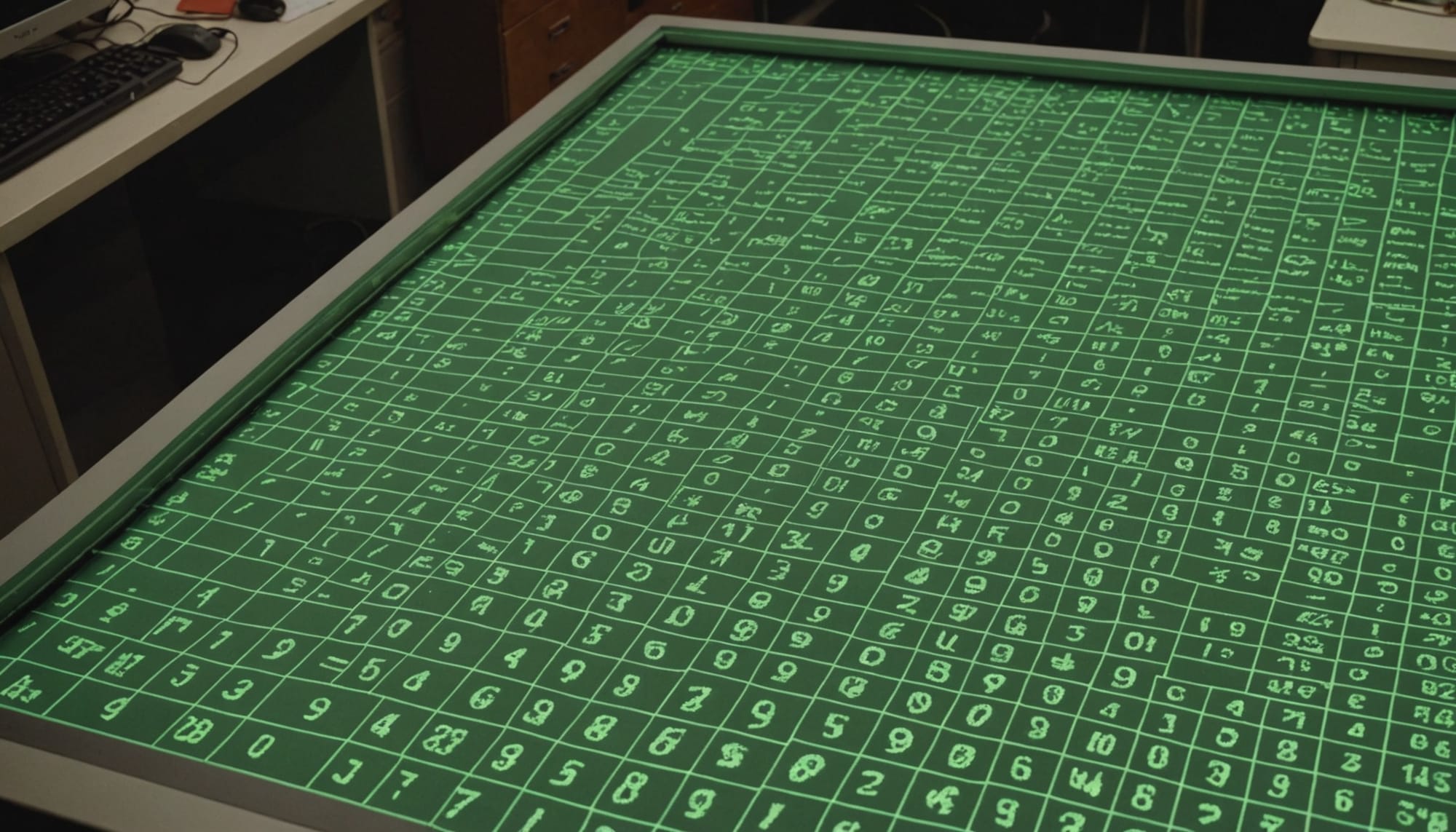
In 1979, a Harvard Business School student named Dan Bricklin sat in a lecture hall watching his professor erase and recalculate an entire financial model on a chalkboard because one assumption had changed. Every number downstream shifted. The professor re-did them all by hand. Bricklin thought: what if a computer could do that?
The result was VisiCalc — the first electronic spreadsheet. And it didn't just save time. It quietly rewired how businesses made decisions.
Here's the thing people miss. Before spreadsheets, asking "what if?" was expensive. What if we raised prices 5%? What if raw materials cost more next quarter? Each scenario required an analyst to spend hours — sometimes days — manually recalculating every linked figure. So companies asked fewer questions. They committed to plans because exploring alternatives was simply too tedious.
The spreadsheet made speculation cheap. Suddenly, a manager could change one cell and watch two hundred others update instantly. The entire posture of business planning shifted from commit and defend to model and explore. That's not a minor operational upgrade. That's a philosophical transformation.
And it happened without a single consultant, bestselling book, or keynote speech. No one rebranded it. No one trademarked a methodology around it. The spreadsheet just showed up and changed the metabolism of organizations.
Think about what followed. Scenario planning went from a luxury of elite strategy firms to something any regional sales manager could do on a Tuesday afternoon. Budgeting became iterative. Financial modeling became a language — one that MBAs and startup founders and nonprofit directors all learned to speak, whether they realized it or not.
Meanwhile, management theories came and went like fashion. Total Quality Management. Reengineering. Agile. Each one promised to revolutionize how organizations worked. Some helped. Most got diluted into jargon and forgotten. But the spreadsheet? It's still there. It's still the substrate beneath almost every business decision on Earth.
There's a deeper lesson here about how change actually works. The most transformative tools don't announce themselves as transformative. They just remove a friction — in this case, the friction of recalculation — and let human curiosity do the rest. Once it became easy to ask "what if," people couldn't stop asking it.
Steven Levy wrote in 1984 that the spreadsheet was "an intellectual pivot point." He was right, but even he might have undersold it. The spreadsheet didn't just help people calculate faster. It made businesses think differently — more fluidly, more probabilistically, more ambitiously.
Every few years, someone declares that a new tool will transform business. Sometimes they're right. But the bar is higher than people realize. To match the spreadsheet, you wouldn't just need to make work faster. You'd need to change the kinds of questions people believe are worth asking.
What's the last tool that actually did that for you?