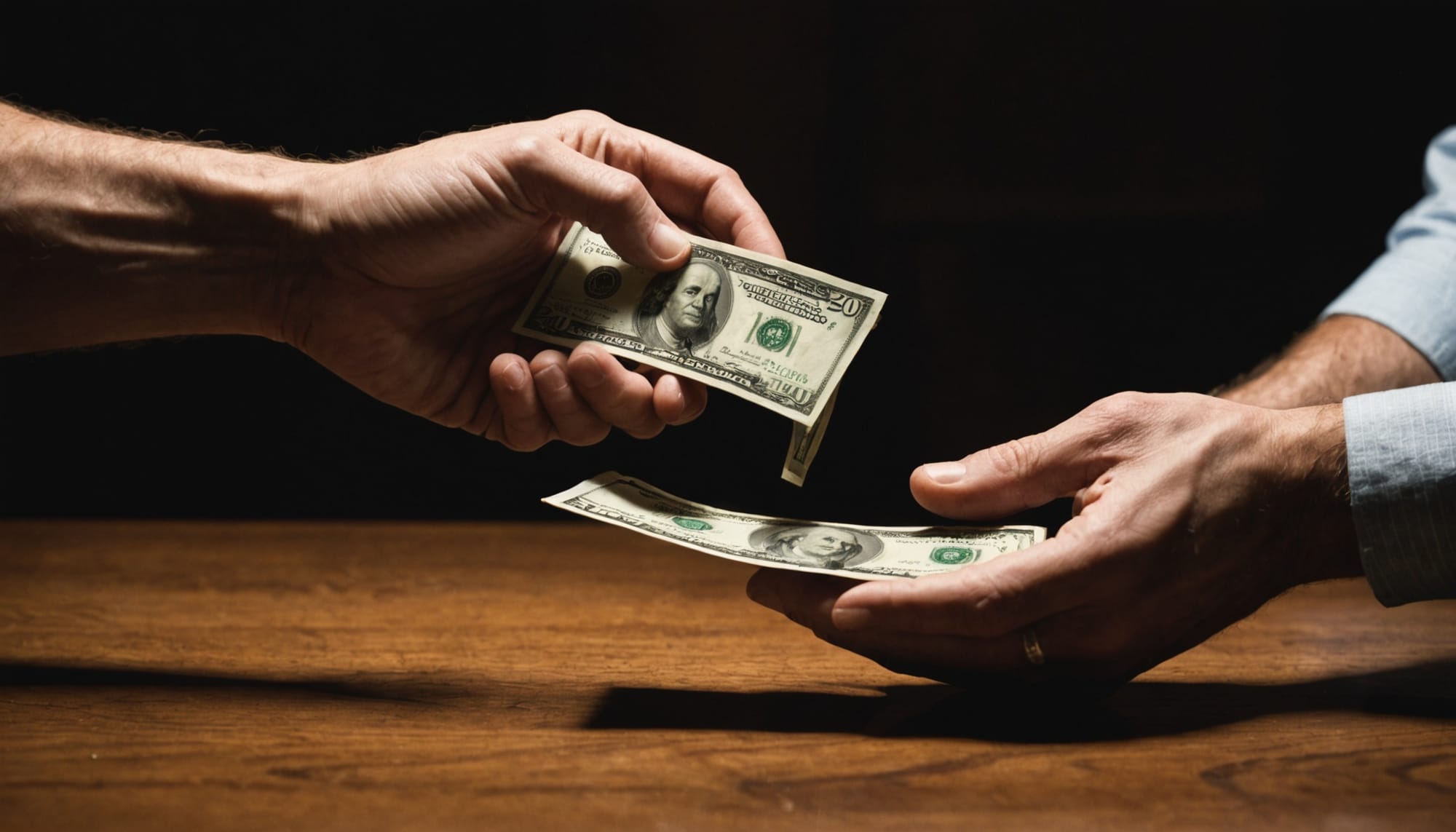
Here's a bet. I flip a coin. Heads, you win $100. Tails, you lose $100. Perfectly fair. Perfectly even odds. And you almost certainly don't want to take it.
You're not being irrational — or rather, you're being irrational in a very specific, well-documented, deeply human way. In the late 1970s, psychologists Daniel Kahneman and Amos Tversky gave this phenomenon a name: loss aversion. Their research showed that for most people, the pain of losing something is roughly twice as intense as the pleasure of gaining the same thing. That $100 loss doesn't just feel bad. It feels about $200 worth of bad.
The asymmetry is baked in deep. Brain imaging studies have shown that losses activate the amygdala — the brain's threat detection center — more vigorously than equivalent gains activate reward pathways. Evolution had good reasons for this. On the savanna, losing your food supply was a more urgent problem than finding a bonus berry bush. The ancestors who shrugged off losses didn't become ancestors for very long.
But here's where it gets interesting. Loss aversion doesn't just show up in gambling scenarios. It's quietly running the show in almost every corner of your life.
It's why you keep that sweater you never wear. You bought it; getting rid of it feels like losing something, even though keeping it costs you closet space and decision fatigue. It's why companies offer "free trials" — once you have the thing, canceling it feels like a loss rather than a return to normal. It's why investors hold losing stocks far too long, hoping to break even, while selling winners too early to "lock in" gains. The pain of crystallizing a loss is so aversive that people will take enormous risks just to avoid it.
Kahneman and Tversky called their broader framework Prospect Theory, and it essentially dismantled the classical economic assumption that humans are rational calculators. We don't evaluate outcomes in absolute terms. We evaluate them relative to a reference point — usually whatever we already have. And we weight the downside roughly double.
This has a strange implication. If someone offers you a coin flip where you win $120 or lose $100, that's a great bet. Positive expected value. Take it a hundred times and you'll come out well ahead. But most people still refuse it. The potential loss looms too large. We are, in a very real sense, leaving money on the table because our brains can't stop overweighting what we might lose.
The good news? Just knowing about loss aversion gives you a small edge. Next time you feel an outsized reluctance to let go of something — a subscription, a sunk cost, a plan that isn't working — you can pause and ask: am I actually evaluating this clearly, or is my brain just doubling the weight of what I'm giving up?
The answer, almost always, is the latter. Which means the most rational thing you can do is distrust exactly how painful the loss feels.