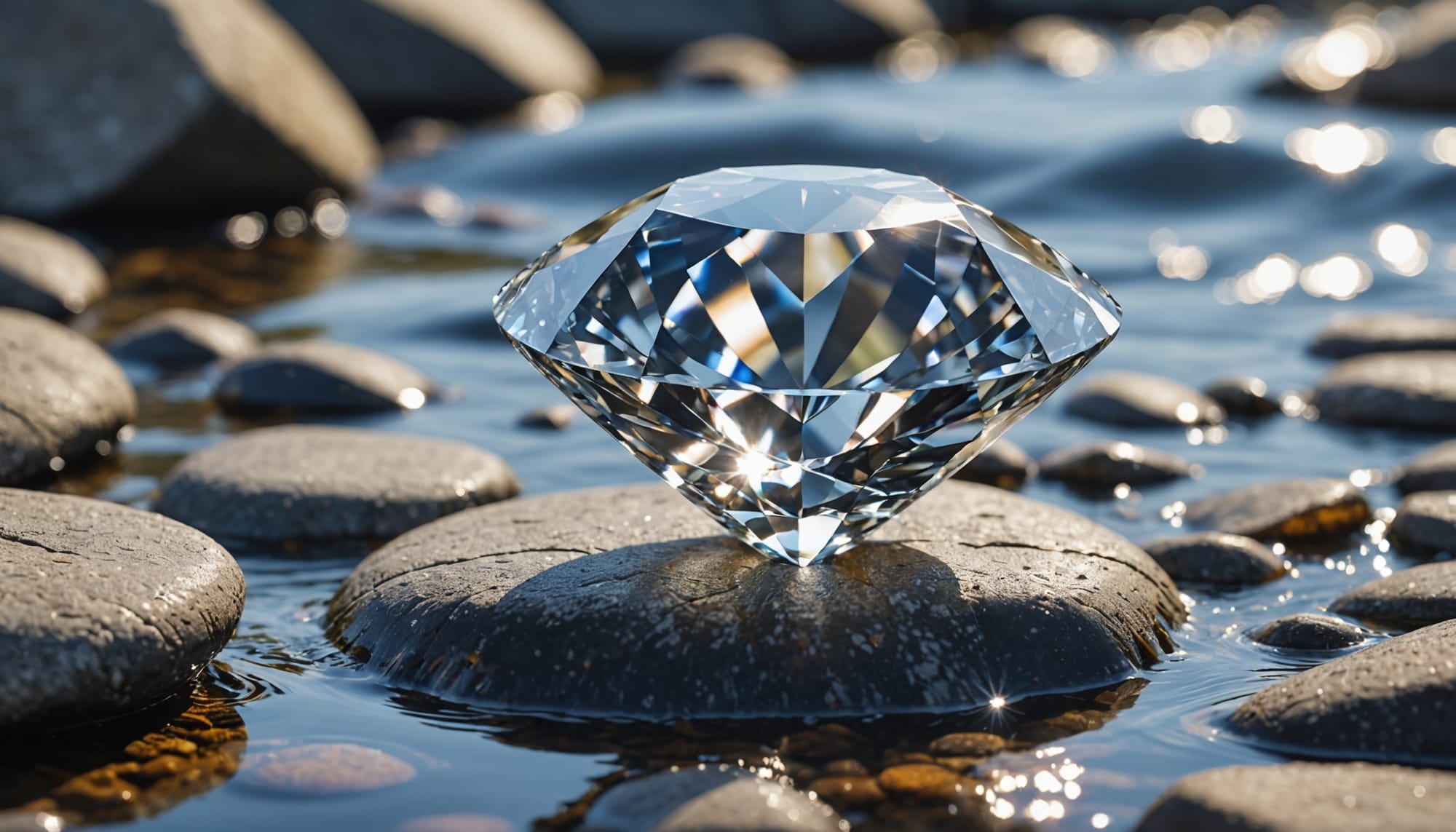
Here's a question that tortured economists for over a hundred years: Why do diamonds cost more than water?
Water keeps you alive. You need it every single day. Without it, you're dead in about 72 hours. Diamonds? They're pretty. That's roughly the full list of things diamonds do for you. And yet a one-carat diamond costs what you'd pay for roughly 10,000 gallons of water.
Adam Smith flagged this paradox in 1776. He called it the "diamond-water paradox," because even the father of economics appreciated a clear label. He noticed that use value and exchange value seemed to have nothing to do with each other. Water has enormous use value but almost no exchange value. Diamonds: the reverse. Smith basically shrugged and moved on.
For a century, this bugged people. It really bugged people. Because the most intuitive theory of value — things cost what they're worth to human survival — was clearly wrong. If prices tracked usefulness, water would be expensive and diamonds would be free party favors.
The answer arrived in the 1870s, when three economists working independently — William Stanley Jevons, Carl Menger, and Léon Walras — cracked it almost simultaneously. The key insight was a concept called marginal utility.
You don't buy "water" in the abstract. You buy the next glass of water. And if you already have plenty of water — which, in most places, you do — that next glass isn't worth much to you. You might wash your car with it. You might water your lawn. You're not going to trade a diamond for it.
But if you were dying of thirst in a desert? You'd hand over every diamond you own for a single bottle.
Value isn't about the category. It's about the next unit. The tenth slice of pizza matters less than the first. The hundredth pair of shoes brings less joy than the fifth. And the thousand-gallonth gallon of water is basically worthless to someone with a working tap.
Diamonds, meanwhile, are scarce. Most people don't have one. So the "next diamond" for most buyers is the first diamond — and first units carry heavy emotional weight. Engagement rings. Milestone gifts. Status. That first diamond is doing a lot of psychological work.
This is what economists call the marginalist revolution, and it's hard to overstate how much it changed. Before this, people thought value was baked into objects — determined by the labor that made them, or their raw usefulness. After this, value lived in the mind of the buyer, at the moment of the decision, for that specific unit.
The whole modern theory of prices, supply curves, and consumer choice grew from this one weird observation about rocks and drinking water.
Next time you see a diamond, consider this: its price has almost nothing to do with what it is and almost everything to do with how many of them you already own — which, for most of us, is exactly zero.