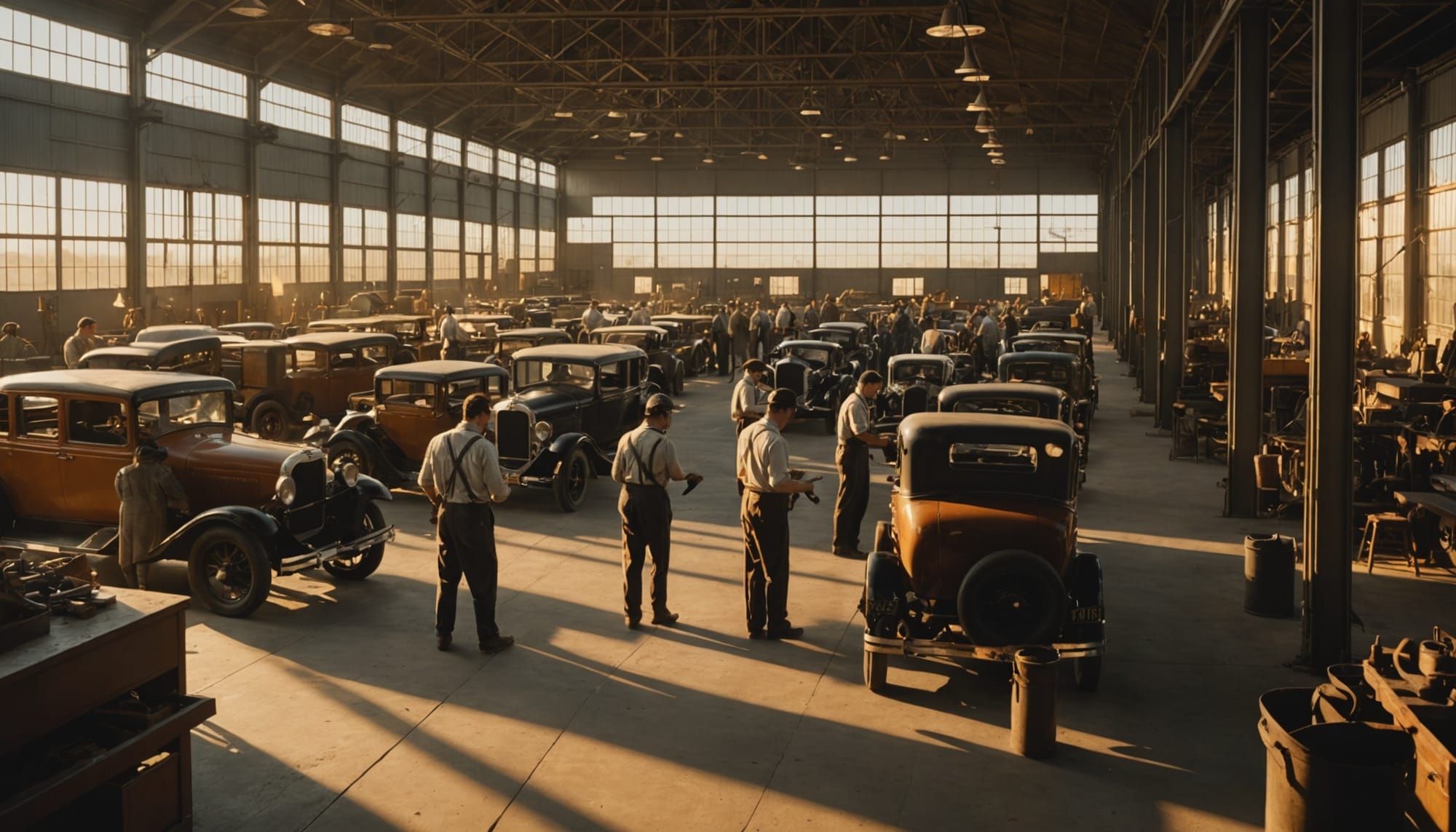
In 1926, Henry Ford did something that shocked American industry. He cut his workers' schedules from six days a week to five, and from 48 hours to 40. He didn't cut their pay. The business world thought he'd lost his mind.
He hadn't. He'd done the math.
Here's the thing people forget about Ford: he wasn't building cars for the rich. He was building cars for the people who built his cars. The Model T was deliberately priced so that a Ford factory worker could afford one. That was the whole game. But there was a problem.
A man who works six days a week doesn't need a car. Where's he going? He's too tired to go anywhere. He's got one day off, and he spends it recovering. A car sitting in a driveway is a car that doesn't need replacing, doesn't need gasoline, doesn't need tires. It's a product with no ecosystem.
Ford realized something that still haunts economics today: production without consumption is pointless. You can manufacture all the goods you want, but if your workers are too exhausted, too time-poor, or too broke to buy them, you've just built an expensive warehouse.
So he gave people Saturday. Not because he cared about their well-being — though he'd later frame it that way — but because he needed them to go places. To drive. To visit family in the next town. To take day trips and stop for gas and wear out their tires and eventually come back for a new model.
He needed consumers, and consumers need leisure.
The results proved him right. Productivity didn't drop. It actually went up. Turns out, rested workers make fewer mistakes. They show up more reliably. They quit less often. Ford got more output from fewer hours, and he created a customer base with the time and energy to spend money.
Other industrialists noticed. Within a decade, the 40-hour week spread across American manufacturing. Not through legislation — that came later, with the Fair Labor Standards Act of 1938 — but through imitation. Ford had found a competitive advantage that looked like generosity.
This is the part that's worth sitting with. The weekend as we know it didn't emerge from moral philosophy or labor rights theory, though those movements were real and vital. It emerged because one very shrewd capitalist realized that human beings are both the means of production and the point of it.
We treat "work" and "life" as if they're in opposition. Ford, for all his many flaws, understood they're the same system. People who live well, work well. People who work well, earn well. People who earn well, spend well.
It makes you wonder: if shorter hours made workers more productive a century ago, what exactly are we protecting by not trying it again?